
Saturday, December 31, 2016


Monday, November 28, 2016
I sent the letter, but...
I Eventually Sent The Letter to
Shrivastava, But….
It is more than a year that I have been out of touch
with most of my old friends, particularly my dear classmate, roommate and
friend, Professor Shrivastava. I have been too preoccupied with having surgery,
the subsequent treatment courses, and the long stay in hospital. Before falling
sick and going under the knife, I received a message from Shrivastava,
informing me of the probability of his coming to Montreal as a visiting
professor. The deterioration of my condition sometime after receiving his
message was such that I almost forgot everything and everyone.
I now feel much better and have vastly
recovered. I am mobile and I write. So
with time on my hands and not knowing anything about my old friends, I
reminisce daily, almost hourly, about Shrivastava and those beautiful, long ago
days in Delhi.
I remember everything as if it was yesterday.
Shrivastava and I were studying in the same class at the Indian Institute of
Mass Communication (IIMC), living in the same room at the same hostel.
Shrivastava was much younger, perhaps six years
younger, than me, but he was already a very skillful journalist and writer who
wrote excellent essays in English and Sanskrit. At the hostel, he would write
essays for newspapers, mostly in Hindi. He would print numerous Devanagari
letters before putting a line on top of them, without which the letters looked
like Avestan writing.
At first I shared a room with two other journalists,
a Bengali named Roy, and Menon, from Kerala. They attended a different course
in journalism, and after a few days they completed the course and left for
their home states. They were good friends of mine and in the first week they
took me around and together we visited most of the historical sites and
monuments of Delhi.
It was during that first week at the hostel that I
became acquainted with Shrivastava. After Menon and Roy left, Srivastava and I became
roommates.
The institute we attended was in Delhi’s South
Extension and the hostel was at Green Park, a twenty-minute walk away. We used
to take a shortcut through the grounds of the All India Medical Institute
Hospital, walking under the shadow of trees and enjoying the nice atmosphere
and beautiful landscape. The hostel was for doctors of the Family Planning
Institute, but journalists were also lodged there. For this, we were teased by
our colleagues who had homes in Delhi: “Be sure you are not seized and castrated,”
they used to caution.
Living with an erudite journalist such as
Shrivastava was instrumental in promoting my language and journalistic skills. With
his knowledge and civility, I could ask for no better companion. He had quite a
sense of humor. Once, in the middle of the night, we were awakened by the
incessant tapping of the watchman’s stick on the pavement of the market below
us. The noise kept us awake for a long time. Srivastava, who was sleeping near
the window, asked me if I understood what the watchman meant by striking his
stick on the pavement? Of course I didn’t, so he explained: “He’s telling thieves
and burglars ‘I am over here; you can do what you like on the other side
without any worry!’” I remembered having read the same joke in the
autobiography of the Egyptian writer Taha Hussein. Later, Shrivastava learned
how to swat pesky mosquitoes between his two hands and how to break two walnuts
by squeezing them in his fist. All this made him the butt of jokes and good humour.
His father was alive then, but he was old and sick.
Once during my stay there, Shrivastava left to visit his father and the rest of
the family who lived in Bhopal, Madhya Pradesh.
Shrivastava was both a teacher and a friend to me; with
him I did not have to worry about anything during my stay in India. Eventually,
the course I was attending was over and I had to return to Kabul. Shrivastava accompanied
me to the airport. The following year I returned to Delhi for only ten days to
attend a book workshop. I stayed at the Ludhi Hotel, and the first person who
came to see me was Shrivastava. I don’t exactly remember whether he was attending
JNU (Jawaherlaal Nehru University) or IIMC at
the time, but I do know that he was pursuing higher education. He visited many
times and we walked about and talked. We had a very good time visiting the
mausoleums of Nizam-ud-din Aulia and Mirza Ghaleb, as well as wandering about
at Connaught Place. Once our classmate, Oma Yadav, invited us over for dinner and
we spent the evening reminiscing and sharing pleasant memories from our time at
IIMC.
Back in Kabul, the situation changed, and I,
together with thousands of other Kabul residents, was forced to leave the
country. The next 19 years I spent outside my country, without any information or
news of any of my Indian classmates, particularly of my dear friend
Shrivastava. In 2002 I had the good fortune of being able to immigrate to my
new country, Canada. I very often recalled the good times I had spent in India,
and was keen to find out where Shrivastava was and what he was doing. Now there was the internet, so opening the IIMC
website I was delighted to learn that my old friend was now an eminent
professor there. I tried to establish contact through email and found the email
address of one Abhilasha. We had a classmate by the name of Abhilasha back in
the day, so I wrote her in the hope of getting a link to my friend Shrivastava.
Abhilasha replied that she was not the classmate I thought she was, but kindly
promised to find Professor Shrivastava’s email address for me.
How delighted I was when I received my first letter
from Professor Shrivastava after so many years. It was as if we were again
together in the journalism class at IIMC. I learned that Shrivastava was a senior-most
professor who frequently made trips to all over India to lecture and teach.
Through him, I found out that our Kashmiri classmate Gita Dhar, now Gita
Bamzai, was also a professor at the IIMC and our other classmate Lalliet
Kashvani, now Lalliet Dubi, had become a great actress and was now retired, with
her daughter having replaced her as an actress. 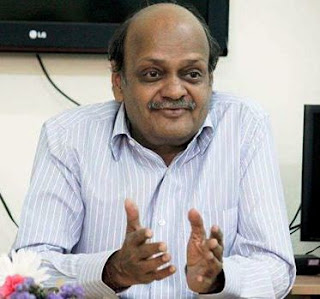 Prof. K.M. Shrivastava
How excited I was when Professor Shrivastava
informed me, shortly before the onset of my debilitating illness, of the
likelihood of his coming to Montreal as a visiting professor! But illness
struck, and before long I found myself at the mouth of the grave and staring
death in the face. For months I lived with excruciating pain which made me forgot
almost everything. Fate, wonderful doctors and kind nurses snatched me from
death’s embrace and brought me back to stability. Gradually, I got better and
better.
It is now over a year from when I had surgery. Although
still under treatment, I am well enough to recall fond memories of past years.
Some time ago, I remembered my pre-hospitalisation anticipation of Professor
Shrivastava’s trip to Montreal. I believed he would be accessible through email
wherever he was. I wrote him briefly about my condition and what I had gone
through, and asked whether he was in Montreal or in Delhi. As usual, I expected
him to answer within a few hours. Not receiving
a reply, I reasoned to myself that he was busy with his academic trips. To
check, I opened the website of our alma mater, IIMC, and was devastated to read
this distressing obituary:
“MOURNING KM
SHRIVASTAVA
Professor KM
Shrivastava
Prof KM Shrivastava
senior-most professor at Indian Institute of Mass Communication (IIMC) New
Delhi, collapsed suddenly last Friday night (28 August) at the Nizammuddin
Railway Station, New Delhi. He was 63. He had just returned to Delhi from IIMC
-Jammu and reached Nizammuddin Railway Station from the Delhi Airport to board
a train for Bhopal. Prof Shrivastava was with a former student, who had come to
drop him at the station, when he collapsed. Prof Shrivastava was rushed to All
India Institute of Medical Science's Trauma Centre but was declared dead on
arrival….”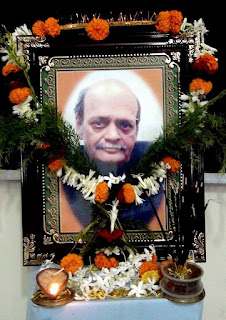
August 28, 2015 was just one month before the date
of my surgery.
Asef Fekrat
Ottawa, November 28, 2016
Thank to Dr. H. Simab for editing this article


Asef Fekrat
Ottawa, November 28, 2016
Saturday, September 12, 2015
Our readings in childhood
We, as sophomores, had recently
passed the examinations, and I had reasons for worrying about my achievements. The
most difficult subject for me was the Principles of History, taught by Prof. Farooq
Etemadi. I had no doubt I would have failed in that subject. I had not understood
anything during several sessions from his lectures.
But why couldn’t I understand his
lessons? Prof. Etemadi was one the best and most famous professors in the
University of Kabul. There were, at least two main reasons I could not fallow
what he was teaching: first, he had a special pure Persian dialect of Kabul,
while I had recently come from the far most western province of Herat. Even though
I had friends and classmates, from Kabul, in high school, the Professor he was
delivering lecture in a quite different dialect. Moreover, he was speaking too
fast. I was begrudging some of my classmates who took notes quickly and had not
problem of understanding. I could not
take notes because I had nothing in mind to take notes.
So when I was told that Prof.
Etemadi wanted to see me in his office, I was really appalled. I had no doubt
of his remorse, blaming and ironies that how could I have been a first degree
graduate with such illiteracy. Even I thought of leaving the university and
going back to Herat, but Kabul was not a place to be left easily. Then, as we
say in Farsi, I told myself: let be what it may be! So I walked toward the
Professors office. Dr. Etemadi welcomed me open-face smiling. Still I thought
he was ridiculing me, but he offered a chair for me to set and thanked that I
had written a good paper. He added that only another student, Atamorad Oimaq,
had written a better paper. But he also added with a meaningful smile that albeit
I had not written according to his teaching, but he is content with my paper. To
be honest, when I sat at the examination table, I wrote what I knew, but not
what the professor had taught in the class, because as I mentioned before, I
could not understand his lectures. All I wrote, and the Professor had liked it,
was the product of my childhood readings, from available journals and papers,
in Herat.
My purpose in writing these words is to throw
light on the educational situation of some children and youth in Herat, half
century ago. In our relevant families as well as similar communities, youngsters
and children who could read were fond of reading and tried always to get or
borrow new readable materials, like newspapers, journals and books. We, a few
number of children in a complex of old and attached houses, started our reading
with the books we could find on the niches and shelves in empty rooms, which
seemed almost abandoned. It’s worth mentioning that prior to governmental
school most of us had attended privet learning sessions, held in mosques and
homes. So before entering governmental elementary schools, most of us could
read books and magazines. One of the
most popular books on those days was One thousand and one nights, that we
called it Alif Laila, derived from Alf, means thousand and Leil, means night. The
book was a collection of lovely stories told by Shahrzad the queen of a cruel
king who had killed his previous consorts after hearing their stories, Shahrzad
had managed never to put an end to her stories, thus we always prayed for
Shahrzad not to be killed. Another popular romance was Amir Arsalan, and
adventurer champion, whose beloved darling was named Farrokh laqa and we still
remember the names of many heroes and heroines, mentioned in that romance. A few other romances also were available in
most homes. But the problem was that our elders believed that those ones and
likewise book should not be read because they would bring adversity and
disaster to readers. So we had to read those books far from other’s eyes.
First complete journals we read were
two almanacs, printed and published around 1933 AD, in Kabul and Tehran. Regarding
the printing techniques, as well as informative and educative contents, Kabul
Almanac – Saalnaama ye Kabul - during those few years, seemed a unique pattern,
not only in Kabul, but also in the region. In addition to the world news, the
Almanac had different long chapters on history, geography, science, art, and entertainment.
It had also a beautiful and attractive calendar of the year. Its photos in
relevant chapters were not only informative but also beautiful and artistic,
which could be framed for hanging on the walls. There in the almanc, were many
calligraphic art pieces which still are being regarded as unique samples.
Unfortunately that was the culmination point for the Almanac of Kabul, and it
traversed a declining route for decades without an improvement. Iranian Pars Almanac – Saalnaama ye Pars –
was not as attractive to us as the first mentioned was, but it had educative
and instructive subjects for us who were thirsty for more information. I
remember that for the first time, in that almanac, I saw, and uselessly tried
to know the music notation. I also remember in this almanac, which also was
published around the year 1933 AD, there was some tricks printed inside the
calendar chapter which were very interesting for us, and we tried to implement
those tricks practically; for example, how to thrust an egg into a bottle by
soaking it in vinegar, or how to make a magnifier with a small hole in a paper
and dripping a drop of water on that little hole. Moreover, in some relevant
families, there were bunches of bound magazines and journals from past years,
which we could borrow and read. In
addition to these occasional readings, the youngsters of a few families had the
opportunity of a regular reading and having almost an up-to-date knowledge of
the news about the region and world. Some of those families had subscribed one
or two magazines or journals, which were available to all literate members of
the families and relatives. In these magazines everybody had his or her own
particular topics to read. Someone liked news while some other wanted to read
serial stories, which would continue to several coming issues. Some liked
cartoons and humors while some others read only the page of poetries and other
literary works. All these journals and magazines came from Iran. There were two
main centres that distributed Iranian journals and magazines: one was Omeedwar bookshop and other was an
intellectual gentleman called Mr. Nojoomi. Both would borrow the publications to
acquaintances, who could not subscribe them. So a great numbers of readers
could have them without subscription.
Herat had one newspaper, named Ittefaq
e Islam, and a monthly or quarterly journal named Majalla ye adabee ye Herat
(Literary journal of Herat). From Kabul seldom came a journal to an occasional
subscriber. Of course, when we were studying in high school, encouraging by the
school’s office, we would subscribe a journal published by Afghanistan Radio,
under the name of Pashtoon zhagh that means the voice of Pashtoons or the voice
of Afghans. During last years in high school, I was fortunate to have many
important literary and artistic journal, which I borrowed from my dear teacher,
famous letterman and historian of Herat, late Ustad Fekri Saljooqi.
I
wrote these words for youngsters who don’t read Farsi materials, to throw light
on our childhood reading in Herat in half a century ago, that helped us make
more progress in Kabul during the university years. Of course in Farsi version on me pages one can
find more detailsMonday, February 23, 2015
Historical Notes by Munshi Muhammad Azim -4
Historical Notes by Munshi Muhammad Azim -4
Russian soldiers’ status in the border
(1312 AH/1894-1895 CE)
The status of the Russian State’s
soldiers in Turkistan, Marv, and other places located in neighborhood of
Herat’s dependencies:
Previous General was General Komarov.
Now, since 1312, General Fatkin, Governor of TransCaspian is in charge of the
affairs of above-mentioned places. In the same year, when The Russian Emperor
had passed away, and his son ascended the throne, General had come for an
excursion to Gonbadhli, near the border. He sent a letter to His Highness,
Sa’duddin khan, Governor of Herat, mentioning the decease of the previous
Emperor and the ascension current Emperor. In the letter, was also mentioned
that at the moment the Emperor had appointed his brother as the Crown Prince,
until the Emperor would have child to become crown prince.
[(At the same place added without
date)]Georgian people of Tiflis have moved toward Qaraqulkhan, Russ and Charkas
to whence the roads are difficult to pass.
Shooting Nasiruddin Shah (1313 AH/1896 CE)
The followers of the Babi sect shot
Nasiruddin Shah twice: First on Shawwal 28, 1268/August 15, 1859 in Shamiran, a
suburb of Tehran, when he was riding. This time, his wound was not fatal and he
could recover. Second time, it was on Friday, Dhu’l Qa’da 17, 1313/April 30, 1896,
in the shrine of Abdul-Azim, when he was shot and martyred. His reign lasted 49
years. His ascension was in 1264 AH/1848 CE and he died in 1313. He had
ascended the throne at the age of 18 and lived for 67 years.
Ascension of Mozaffaruddin Shah
(1313 AH/1896 CE)
Mozaffaruddin Shah, Son of Nasiruddin
shah ascended the throne on Dhu’l Hijja 26, 1313/June 8, 1896. When he was the
crown prince he lived in Tabriz [as the governor]. He was 44 when he came to
Tehran and ascended the throne. He had been born in the month of Jumadi II,
1269/February, 1853. [(The ascension note is briefly repeated in another
place)].
Festival of Unity
(Jashn-e-Mottafeqiyya)(1214 AH/1896 CE)
The Festival of Unity [that in Farsi was
called Jashn-e-Mottafeqiyya], was being celebrated in the reign of Amir
Abdurrahman khan on Asad 26/August 16 of every year. The first celebration was
held on Rabi’ I 7, 1214/August 16, 1896
The expense of the festival for the city
and suburbs was paid by His Highness [(The
Amir)]
Census in Herat (1314 AH/1896 CE)
Census was
taken in Herat during the reign of His Highness Zia’u’lmillata waddin [(his
majestic title)], the late Amir Abdurrahman khan, in the year 1314 AH/1896 CE):
Male
population, without female, and without the population of the main part of the
city: one hundred two thousand souls, eight block of jolga [(plain)] and
the block of Shaflan: 32 thousand souls, provinces and suburbs: 70 thousand
souls [(two last items are counted by Siaq which I am not sure that I have read
them correctly, but first item is clearly written in Hindi numbers.)]
Population of
different religions (1317
AH/1899-1900 CE)
The population
of different religions in the year 1317 AH/1899-1900 CE is as followed:
Muslims: 3oo
crore souls [(=3,000,000,000)]
Christians: 800
crore souls [(=8,000,000,000)]
Jews: 14 crore
souls [(=140,000,000)]
Other
religions: 1500 crore souls [(=15,000,000,000)]
Muzaffaruddin Shah's travel to Frang [(Europe)]
(1317 AH/1899-1900 CE)
First trip of Muzaffaruddin shah to Frang [(Europe)] took place in the year 1317 AH/1899-1900 CE
Death of the
Queen (1318 AH/1901 CE)
The Queen of
Englistan [(Britain)] died in the Year 1318 equal to one thousand nine hundred
[one] of the Christian era. She had ascended the throne in 1837 CE and her
reign lasted 53 years. [(Her reign lasted almost 64 years)]
Death of Amir
Abdurrahman (1319 AH/1901
CE)
The death of
the late Khaqan [(the king)] of Afghanistan, Amir Abdurrahman khan, took place
on 19 of Jumadi II in the year 1319/ October 3, 1901 in the Royal seat of
Kabul.
Ascension of
Amir Habibullah (1319 AH/1901
CE)
Amir Habibullah
khan, King of Afghanistan, Ascended the throne in the year 1319 Bars-eel. [(The
sentence is repeated at another place and added)] in Kabul.
The National
Unity Festival (Muharram 24)
The National Unity
Festival is being held every year on first of Thaur (21 April) during the reign
of Amir Habibullah khan. The first year’s festival took place on 24 of Muharram
[(it could have been 24th Muharram 1321/22nd April 1903)]
that the festival was run in the provinces of Afghanistan.
Dearth and
drought in Herat (1320 AH/1902-1903
CE)
In the year
Bars-eel 1320 AH there was an exceeding dearth in Herat and suburbs, due to the
insufficiency of precipitations. One Kherwar [(around 300 kg.)] of wheat was
sold for 450 or 500 Kran [(a monetary unit, a coin)], and so was sold barley. One
Kherwar of rice was sold for 550 Kran. A half Man [(4 kg)] of straw was sold
for one Kran, so most cattle of people in the city as well as the cattle of
husbandmen in the rural area around Herat were perished due to the lack of
straw and barley. Other grains like raw
peas, lentil and grass peas were also expensive. Yellow ghee was one Man
[(4kg)] for 20 Krans, lamp oil, one Man for 12 of 15 Krans, yogurt one man for
one and a half Krans , and meat one Man for 10 Krans.
Also in the
year of Tooshqan-eel, when the wheat and barley plants were blooming with ears,
there came a hail, approximately in two districts, in the suburbs around the
city of Herat, and caused a little dearth.
There was an
intense dearth also in the year of eelan-eel, the snake-year, in Herat and
suburbs, as some of the wheat and barley fields were bitten by the frost. The
price of one Kherwar [(300kg)]wheat reached 400 Kran, one Kherwar barley for
300 Kran and rice from 400 and 500 Kran, ghee one Man for 16 Kran, lamp-oil one
Man for 8 Kran, meat one Man for 6 Kran, dried whey one Man for 4 Kran, yogurt
one Man from one and a half to 2 Kran, onion one Man for one and a half Kran,
straw 3 Mans for one Kran and so was everything expensive until the beginning
of the harvest of looy eel’s year
Amir’s birthday
festival (1321 AH-103 CE)
The birthday
festival for His Majesty Amir Habibullah Khan took place in Herat, on
Tuesday Rabi’ II 25, 1321/ July 21 (28
Saratan) 1901 in the year of tooshqan eel. During that day there was festival and
at night the bazaar and Charbagh were illuminated [(here quoted a verse
praising the Amir)].
Titles of
Amir’s consorts (1321 AH/1903
CE)
His Majesty,
Seraj-ul-millat-waddin [Amir Habibullah] has bestowed titles to her four
consorts, as followed:
Her Majesty
Mother of Amanullah khan: Seraj-ul-khawatin.
Mohammad Nader
khan’s sister: Her Highness Noor-ul-haram.
Inayat-ullah
khan’s mother: Her high-positioned Badr-ul-haram.
His
High-positioned Sardar Mohammad Ibrahim khan’s daughter: Her High-ranked
Satr-ul-haram.
These titles
were bestowed and addressed on the night of 14th of Ramadan, year
1321/ December 4, 1904, and the decree was issued for the information of the
inhabitants of Afghanistan.
Injustice of
the Sherriff of Mecca (1321
AH/1903-1904 CE)
In the year
1321 when I was honored to be in Mecca, people said that the sheriff of Mecca
was practicing unjustly.
The war between
Russia and Japan in the year 1322 AH /1905
CE [(without further information)]
Titles for
courtiers (1322 AH/1905 CE)
According to a
decree arrived from the Royal Capital, the Sardars and Khans of the Court are
bestowed titles as followed:
Sardar
Nasrullah khan, brother of Amir Saheb: Na’ibussaltana [(= Regent)]
Sardar
Inayatullah khan, son of Amir Saheb: Mu’inussaltana [(= Assistant of the
Kingdom)]
Prince
Amanullah khan, son of Amir Saheb: Ainuddawla [(= The Eye of the State)]
Sardar
Abdulquddoos khan: I’temaduddawla [(Trustee for the State)]
Khoshdil khan:
Loy Nab, Deputy Governor, who receives subject’s petitions.
Sardar
Abdulwahab khan: Aminulmakateeb [(Trustee for the Correspondence)]
Fath Mohammad
khan Kotwal: Aminul’Assass [(Trustee for the Police)]
Nazir Mohammad
Safar khan: Aminul‘Ittela’at [(Trustee for the Intelligence)]
Sardar Abdullah
khan Timuri: Aminuzzakat [(Trustee for Islamic Taxes)]
Ishik Aqasi
Mohammad Shah khan: Na’ib [(Deputy)] for Na’ibussaltana and Mu’inussaltana.
Sardar Mahammad
Yonos khan: Aminulwojoohat [(Trustee for Finance)]
Mirza Mohammad
Hussein khan Kotwal: Chief Accountant of the Country.
[(at front of
the names of Aminul’Ittela’at and Aminul’Assass:)] And ordered that anyone
having a petition or any subject, should submit it to them.
The Shri’a
Religious affairs is bestowed to twelve famous Ulama’ [(Religious Scholars)]
under the command of Sayyed Mir Ali khan Khatib, whose Na’ib or Deputy is Mulla
Abdurrazzaq.
The decrees
were issued on Dhi’l Hijja 14, year of
Looy-eel 1322/ February 19, 1905
End of the
Governorship of Sa’duddin khan
(1322 AH/1904CE)
Justice Molla
Sa’duddin khan, in the God given State of His Majesty Zia’ulmillata waddin Amir
Abdurrahman khan had been appointed as the Deputy Governor of Herat. He
continued the career during the reign of Serajulmillata waddin Amir Habibullah
khan. Sa’duddin khan was son of Justice Mulla Abdurrahman and grandson of
Justice Mulla Mohammad Sa’id khan. He was Deputy Governor for 18 years (sic). At
the 19th year of the reign of Amir Habibullah khan he was deposed
from the governorship and in the year looy-eel 1322/1904 CE, 3 months remaining
from that year, His Excellency Mohammad Sarwar khan was appointed as the Deputy
Governor of Herat and on 26 of Dhu’lqa’da arrived in Herat.
Arrival of the
new Deputy Governor in Herat
(1322 AH/1904 CE)
His Excellency
Mohammad Sarwar khan, Deputy Governor Saheb arrived in Herat on Wednesday 26 of
Dhi’lqa’da, looy-eel 1322/February 1st 1904 in the winter time
second day of Chella khord [(Little Forty or Second Forty)]. The meeting
session for the arrival day was held at Salamkhana-Kuti in Charbagh.
Akhond Khurasani (1322 AH/1904-1905)
His Excellency
Hujjatul’islam Mulla Mohammad Kazem Akhond Khurasani whom [I] met in Najaf –
ashraf was originally from Herat, and had five sons in the year 1322
AH/1904-1905 CE
British
delegation in Kabul (1322-1323
AH/1904-1905 CE)
A copy of the publicity from His Excellency
Highness Amir Habibullah khan:
From your
previous counterpart, the British State, His Excellency Mr. Louis William Dean
C.S.E. the foreign minister of Hindustan, along with six European persons and
others from Hindustani people, had come for the solidity of the agreement, to
Kabul. They arrived in the Royal capital, Kabul on Shawwal-ul-mukarram 4,
1322/December 12, 1904 and stayed here for 3 months and 18 days. They visited
many times the luminous presence of His Highness, and negotiated on all issues
corresponding to the mutual benefits of both states. They agreed that the
previous principles and procedure of the Late Khaqan, Zia-ul-millat waddin
should be continued. Faqat[(That is all)] They, all with pleasure, got
permission to leave for their country, on Thursday, Muharram-ul-haram 23, eelaneel
year 1323/March 30, 1905.
Troops and
artillery in Faizabad (1323 AH/1905-1906
CE)
In the city of
Faizabad, a dependency of Balkh, there are appointed and settled a complete
regiment and artillery and special troops, ordered by the Afghanistan Monarchy.
Jashn of
Nawrooz in Herat (1323 AH/1905 CE)
According to
the order of His Excellency Deputy Governor Mohammad Sarwar khan, Jashn
(ceremony) of Nawrooz took place on Muharram 14, 1323/ March 21, 1905, in the
Royal Garden (Bagh e Shahi). Civil as well as Military officers and businessmen
were present in the ceremony.
Hail in Herat (1323 AH/1905 CE)
In the current
year of eelaan-eel 1323, in the late afternoon of Ra18bi’ I 4th of
Jawza/ may 23,1905 there were such rain and hail that water was flowing in the
lanes of the city. It was on 66th day of Nawrooz, which is called
Shisha in Herat [(6th, 16th, 26th….and 66th
days after Nawrooz are traditionally called Sishas that are supposed to get
cold)]
2744 houses in
Herat (1323 AH/1905-1906 CE)
The houses in
Herat were counted 2744 houses in the main city of Herat, in the current year
of eelaan-eel 1323 AH/1905-1906 CE [(This sentence is being repeated in another
place)]
2400 cavalries
in Herat (1323 AH/1905-1906 CE)
There are 2400
cavalry troops in Herat, in the current year of eelaaneel, the year of snake,
1323 AH/1905-1906 CE.
Amir’s trip to
India (1324 AH/1906 CE)
His Majesty
Serajulmillat waddin Amir Habibullah khan, traveled to India to visit the
Viceroy of India in the middle of the year of yont-eel 1324, 12 of
Shawwal/November 29, 1906, in the winter. Then returning from his trip, His
Majesty came to Herat and raised the flag of self-determination in the Arg
(citadel) of Herat, in the month of Jumadi II, 1325/July 1907.
Birthday of
Amir Habibullah (1324 AH/1906
CE)
His Majesty
Amir Habibullah khan was born on Monday, Rabi’ II 25, 1289/July 2, 1872, and
this year, eelaan-eel (1324 AH/1906 CE) is his thirty-forth year of age and
fifth year of His Highness’ ascension that had taken place on Jumadi II 19 (10th
of Solar month of Mizan)1319/ October 3, 1901. On His Excellency’s Birthday,
first of Thawr, every year, there are ceremonies all over the country.
Publishing of Besharat (1324 AH/1906-1907 CE)
A newspaper,
called Besharat-Tuhfaturrazawiyya, has been printed and published in
Mashhad-e-Toos, in the year 1324 AH/1906 CE. The Editor-in-Chief of the
newspaper is Mohammad Ali and Editor is Azizullah Fasihulmamalek.
Matches Factory (1324 AH/1906-1907 CE)
In the year
1324 AH/1906-1907 CE, it was decided to buy and import a Factory of match
making for producing matches in Mashhad regularly.
Jewish calendar
(1324 AH/AM 5667 Jewish)
Jewish history
is older that other histories; for example, this year yont-eel 1324 corresponds
to 5667 Jewish year.
Snow after
Nawrooz (1324 AH/1927 CE)
In the year
yont-eel, year of horse 1324/1907 CE 17 days after Nawrooz (April 6) in the
late night, snow fell [in Herat] till morning, and the weather turned so cold
that we needed fire. All fruit trees were bitten by frost, but still there was
enough amount of grape.
Republican
Assembly (1324 AH/1907 CE)
Trusty
travelers returned from Atabat (Holy Shrines) says that, they had heard in
Tehran, that the King of Iran had appointed a Republican Assembly consisting
khans and religious authorities to consult according to the benefits of their
State and Nation. They have also dismissed the foreign banks and have
established their own bank. Iranian businessmen have deposited forty five
million [(Tooman?)] in cash, in that bank, to cooperate their government. [(By
republican assembly Munshi meant consultative assembly)].
Tehran-Mashhad
railroad (1324 AH-1906-1907 CE)
In the year
yont-eel 1324 AH/1906-1907 CE building a railroad from Tehran to Mashhad was
started. Previously there was built a metalled between Tehran and Simnan but
there was no railroad.
Herat-Mashhad
road (1324 AH-1906-1907 CE)
The road
between Herat and Mashhad is under construction. Now, Dhu’l Qa’da, 1324, the
construction is going on the way from Herat to Kuhsan [(a district in Herat)]
Death of
Mozaffaruddin Shah (1324 AH/1907
CE)
Mozaffaruddin
Shah, king of Iran, died on Tuesday night, Dhu’l Qa’da 23, 1324/January 8, 1907.
Nobles and dignitaries went to present their condolences to the Governor of
Khurasan and High Custodianship, first day at Holly Shrine, then in the Mosque
of Gowharshad. [(in another place)]: Mozaffaruddin Shah lived for 55 years, and
his son Mohammad Ali Shah ascended the throne in Du’l Hijja 1324.
Condolence
gathering in Herat (1325 AH/1907
CE)
His Eminence
Amir was in India [when Mozaffaruddin Shah died] and ordered that condolence
gatherings should be held in Afghanistan, for the late king of Iran. In Herat,
there was a three-day condolence gathering, Muharram 25, 26 and 27, 1325/March 10,
11 and 12, 1907. All the markets were closed and six thousand Rupees was spent
by the government for the gatherings.
[(It is worth
mentioning that a few years before, when Amir Abdurrahman khan died, Mozaffaruddin
Shah of Iran had ordered the Governor of Khurasan to hold a condolence
gathering for that Muslim King, and publish a general invitation, he also ordered
to serve meal and to appoint religious authorities and sayyeds to recite Holly
Qur’an for three days. There is an account for this incident in Serajuttawarikh
by Faiz Mohammad Kateb, II/3. p.94)]
Amir Habibullah
khan in Herat (1325 AH/1907
CE)
Fortunate
arrival of His Majesty Seraj-ul-millat waddin, King of Afghanistan in the Darunnustat
[(victorious house)] of Herat, took place at 10 AM on Wednesday, Jumadi I 28,
1325, qoy-eel/July 9 1907, in the solar month of Saratan in Tamooz season [(hot
period of summer)], coming via Kandahar and returning via Turkistan.
Repairing
Jami’s Shrine (1325 AH/1907
CE)
His Majesty
Seraj-ul-millat waddin Amir Habibullah khan, during his stay in Herat, ordered the
Shrine of Mawlawi Jami Saheb (may his grave be sanctified) to be repaired, and
endowed the Qanat [( Drinking water subterranean canal)] of Khusravan, which
was government’s property, to the shrine.
Repairing the
rampart around Herat (1325 AH/1907
CE)
His Majesty
Seraj-ul-millat waddin Amir Habibullah khan, during his stay in Herat, ordered
the rampart around Herat to be repaired. According to the order, four hundred
workers from districts’ subjects would be hired and each worker would receive
eight Kabuli Rupees every month, by the government.
Repair-fund for
Masjid Jami’ (1325 AH/1907
CE)
His Majesty
Seraj-ul-millat waddin Amir Habibullah khan, during his stay in Herat, granted
twenty thousand Pokhta-Rupees that was equal to forty thousand Karan-Rupees to
the repair of the Noble Masjid Jami’ of Herat. The sum was paid from the 98962
Pokhta-Kabuli Rupees presented as a gift by the military personnel settled in
Herat.
Exemption of
taxes (1325 AH/1907 CE)
His Majesty
Seraj-ul-millat waddin forgave an amount of two crore ninety-five lak Kabuli
Rupees (29,500,000 Kabuli Rupees) debt of real estate sanctions that had
remained unpaid for 17 years. The debt had remained since the closure of the
100,000 block [(a tax office)]. [His Majesty] also has forgiven the debt of
fugitives who would not have pay tax for 3 years after they return, and they
would have to pay by the fourth year.
39 days in
Herat (1325 AH/1907 CE)
His Majesty
Seraj-ul-millat waddin Amir Habibullah khan left Herat on Saturday, Rajab-ul-murajjab
7, 1325 qoy-eel/August 16, 1907 at 4:30 PM. He had stayed in Herat for 39 days.
Afghan agent in
Mashhad (1325 AH/1907 CE)
Alijah (High-positioned)
Abdullah khan, the agent of the Government of Afghanistan in Mashhad, was
honored to come and attend the presence of His Majesty Seraj-ul-millat waddin.
He is the Afghan agent in Mashhad for fourteen years. During this auspicious
year that His Majesty, visiting His provinces, arrived Herat on Jumadi I 28,
1325/July 9, 1907, according to the Royal order, Abdullah khan came to Herat.
He was honored to have the attendance of the His Majesty at Qorchi, two or three
marches to Maimana. He was honored with robe of honour and medal of
Izzat-Afghaniyya [(Afghan glory)] and was permitted to return. He came to Herat
and visited his family and friends and returned comfortably to Mashhad. He
received an additional 12000 Kran salary, and he presented [(to the King)] two
distinguished Arabic horses. [(|His name is mentioned in Serajuttawarikh, once
as Abdullah khan Mushkvani and several times as Abdullah khan Mushvani.)]
Merchants of
Mashhad (1325 AH/1907-1908 CE)
The merchants
of the Holy Land (Mashhad) from past times till now, the year 1325 AH/1907-1908
CE: Haji Mohammad Hassan Mo’avenuttujjar [(vice president of chamber of
commerce)], who is originally from Herat, Haji Arbab, and others. There are
several merchants from Mashhad, and Turks and trusties who are busy in big
businesses. [(Perhaps Munshi intended to write a list of merchants but he did
not, or could not complete it.)]
Sardaftar in
Herat (1325 AH/1907 CE)
Mohammad Sarwar
khan Sardaftar arrived in Herat on Thursday, Safar-ul-mazaffar 20 1325/April 4,
1907 [(after Safar-ul-mozaffar there is written 14, perhaps by mistake.
Sardaftar is a Farsi word that means head of the office. Here it seems that the
word had gradually become his last name.)]
Kako Jankhan in
Herat (1325 AH/1907 CE)
Alijah
[(High-positioned)], Shuja’at nashan[(Bravery-medalled)] Kako Jankhan arrived
in Herat on Sunday, Jumadi II, 1325/July 21, 1907 qoy-eel, via Hazara, from the
Royal capital, Kabul, in the month of Tamooz/Asad, 12 days after the arrival of
His Majesty.
Hajj of Friends (1325 AH/1907 CE)
Aqa Mirza Razi
Tabib left Herat along with friends for Hajj, on Saturday, auspicious month of
Ramadan 4, qoy-eel year 1325/September 12, 1907 via Holy Land [(Mashhad)] and
Ashgabat. The Hajj period then was in the winter. They accomplished the
pilgrimages on the way, and they arrived in Herat after nine months. Even
though there was cholera disease in noble Mecca as well as in noble Medina,
they all returned in good health. The names of returned Hajis are as follows:
Haji Mirza Razi, Haji Amir Jan, Haji Gholam Ali Alaqa-band son of Haji Mohammad
Ja’far, Haji Mohammad Kazem Attar son-ik-law of Haji Mirza Haidarqoli Tabib,
Haji Aowlad Rajab Khaliqdad, Haji Mohammd Ja’far Attar Frahi. Mirza [(a first name is effaced and cannot be
read)] Alikhan who had gone from Mashhad did not come to Herat.
Block of Rs
100,000 (1326 AH/1908 CE)
The block of
Lak Rupeeagi [(Rs 100,000)] for drawing tax, that is being closed, was established
in the reign of the late Khaqan [(King)] Amir Abdurrahman khan, in the year of
Seechqan-eel [(sic)] and is closed at the time of Amir Habibullah khan, and
[(tax)] has been assigned from the office according to the previous order. [(In
another place)] In the reign of the late Khaqan [(King)] Amir Habibullah khan,
a Block establishment was ordered for the cash and goods’ tax drawing. The
process was carried on by the Herati employees, since the year of seechqan-eel.
The employees had gone to Kabul in the year of tangooz-eel. At the end of the
year they received the governmental book along with honor-dress and two-month
salary. They came to Herat and carried on their duties according the
governmental book. [(In Farsi, block is written as bolak, which is also
repeatedly mentioned in Serajuttarikh by Faiz Mohammad Katib. It seems that
block had been a branch in some offices.)]

Hajj of Qazi
Ata Mohammad [(1326 AH/1908
CE)]
Qazi [(the
Judge)] Mir Ata Mohammad khan left Herat for Hajj, on Thursday Ramadan 14,
1326/October 10, 1908, via Shaikh Junaid. His maternal uncle, Mulla Mohammad
also accompanied him.
General in
Herat (1329 AH/1911 CE)
Alijah [(High-positioned)] Abdurrahim khan
Mohammadzai, Military General arrived in Herat from Kabul, in the month of
Shawwal 1329tangooz-eel/September or October 1911
End of Notes
with dates that were arranged chronologically. There are a few nonhistorical
nots which will be published here afterward.
Thursday, January 08, 2015
Historical Notes by Munshi Mohammad Azim - 3
Historical Notes by Munshi Mohammad Azim
- 3
The news of Rome in the year 1298
AH/1881 CE
The number of soldiers in the Rome state (Ottoman
Turkey) while fighting with Russia was more than 500.000. This number, after
the war has decreased to 380,000. But these remainders are more skilful and
experienced than those 500,000.
Population of Britain at the same year
(1298 AH/1881 CE)
In Great Britain, including Ireland, the Channel and
Mann Islands, there live 35,246,562 persons. This number includes the land as
well as the navel armies.
According to the census of 1871 population of
Anglistan (Great Britain) was 31,845,379 persons. Thus, it seems that in ten
years, the population had an increase of 4,147,236 persons [(by subtracting the
difference or the increase seems to be 3,401,283)]. From this number,
17,253,947 persons are male and 17,992,615 persons are female. Accordingly, in
Great Britain, females are in majority. The population of the capital - London
– in 1871 CE was 3,254,260, while ten years later; in 1881 CE it reached
3,800,471. From the population of London, 1,794,106 persons are male and 2,020,465
are female [(the calculation of male and female does not respond correctly)].
There are 486,208 houses in London, from which
37,000 houses are uninhabited and 8,000 houses are not yet completed. Thus, in
every house in London, on average, there live 8 persons.
Amir Abdurrahman khan visiting The Viceroy
(1302
AH/1885-1886 CE)
The visit of Amir Abdurrahman khan, the king of
Afghanistan, took place in Punjab at the town of Rawalpindi, in the year 1302
AH/1885-1886 CE. [(The subject is mentioned in another place with more details,
but without the date, as follows)] : You, the British State, cannot disregard your four thousand-year old State
and dignity, and we cannot disregard our eight thousand-year old home and
chastity and property. The account of the visit was written by Mirza Mohammad
Nabi khan Dabir-ul-mulk of Afghanistan. The account was printed, ordered by the
praised Amir. It includes all conversations as well as governmental questions
and answers. By reading this booklet, one may learn the quality of the visit in
detail.
Demarcation of the Afghan-Russia border
(1302 AH/1884 CE)
British Sahibs, [(sahib here means high-rank English
officer)], came to mark the border between Afghan and Russian states. They had
come from India through Baluchi road, and landed at Zenda-jan of Herat, where
they visited the Governor of Herat. They arrived Zenda-jan and visited Deputy
Mohammad Sarwar khan on Friday, Muharram 25, 1302/November 14, 1884 CE, year of
pichi eel [(which is the Chinese name of the year)].
British Sahibs were 27 persons in their commission.
And other army officers, including cavalry and infantry were 500 persons;: 250
from platoon infantry, and 250 from mounted rasala, [(a group of mounted
soldiers)]. They were totally one
thousand two hundred twenty seven persons including officers, soldiers, and
servants. There were two thousand rented camels and mules loaded mostly with
their foodstuffs.
Their commander in chief, at first, was General
Lumsdon, who had come along with a few accompaniers through Iran. He returned
later to his country. Then there came Colonel Ridgway, with a few mounted and
infantry-men, from India, through Baluchi (Baluchistan). At first, he was being
appointed to look after Lumsdon; when the latter was leaving, he appointed
Ridgway as the commander in chief, to carry on the demarcation of the border
with the state of Russia. He completed the demarcation, from Herat to Turkistan.
Then he went to Kabul, wherefrom he
returned to India. General Lumsdon had
asked for his resignation when the Punjdeh war had taken place, He returned to
his country, but Ridgway and his military companions stayed and completed the
demarcation. The abovementioned commission was consisted of seven hundred
Indians and it included totally one thousand two hundred twenty seven persons,
as previously mentioned.

Sulaiman khan Sahib-ikhtiar and
demarcation with Russia (without mentioning the date)
Sulaiman khan Sahib ikhtiar, was appointed, in the time
of Nassiruddin Shah, to fix the border with Russia on behalf of the government
of Iran. He gave over, intentionally or by mistake, many parts of Iranian
territory and the soil of Khurasan to Russia. Russians still have control over
those places.
Endowment property in Herat
(1302 AH/1883-1884 CE)
Aqa Sayyed Hussein Herati, who had been settled in
the Holy land [(Mashhad)], in the year 1302, endowed his twenty one units of
shops to Imam Reza (POH). There were some other places, like real estates, bath
house and shops in the city of Herat and rural areas like Urtkhwan and Pashtan,
which were endowed to Imam.
Death of deputy Sarwar khan
(1303 AH/ 1886 CE)
Deputy [governor] Mohammad Sarwar khan had been
appointed as Governor of Herat, after Sardar Abdulqoddoos khan, at the end of 1298
AH. At the end of 1303 AH/1886 CE he left Herat for Kabul where he passed away.
Russian Commissioner left Balamurghab
(1303 AH/1886 CE)
The Russian State’s Commissioner moved out from the
Qrawolkhana lodging place of Balamurghab, on Sunday 13 Rajab, 1303/17 April,
1886. Russian commissioner’s name was Kolberg, and they said [(from this place
at least two four pages of Monshi’s notebook is being missed)]…
Ayyoob khan’s last flight (1304
AH/1887 CE)
Sardar Mohammad Ayyoob khan fled to Iran three
times: First fearing of his father,Amir Shir Ali khan’s appalling army; second, after being defeated
in the war in Kandahar, by Amir Abdurrahman khan, and third, when Deputy-governor
Sa’duddin khan and
Commander-in-Chief Framorz khan were
appointed to Herat by Amir Abdurrahman khan. The last time Sardar came from
Tehran to Khurasan and from there to the places of Kaland and Mando, at the
border. He and a few Herati mounted soldiers were defeated by Kabuli cavalries who
had been sent from Herat. Sardar Ayyoob khan suffering difficulties arrived to
Mashhad. Then receiving allowance from British State, he and his companions
were taken, through Baghdad to India, where they still live.
Later, Amir Abdurrahman khan showed affability and
caress to all Mohammadzai Sardars and other Khans of Kabul and Kandahar, who
had fled to India and Iran, at the time of disturbances and revolts of
Afghanistan. They returned to Afghanistan, and received salary at the reign of
Amir Abdurrahman khan as they receive now, at the reign of late Amir Sahib’s
successor, Amir Habibullah khan.
Governorship of Sa’duddin khan in Herat
(1304 AH/1887 CE)
At the beginning of the year 1304 AH/1887 CE, Amir
Abdurrahman khan appointed Sa’duddin khan as his Deputy-governor of Herat. He
was appointed after Deputy-governor Mohammad Sarwar khan, and arrived in Herat
four days before Nawrooz.
A letter from Panjdeh
(1308 AH/1890 CE)
A letter arrived from Tarkhanov, Officer and Governor
of Panjdeh, to Sa’duddin khan governor of Herat, on 10th of
Dhul’hijja 1308/17th January1890. To summarize, he had written that:
Happy Eid and God accept your sacrifice. Then he had added that from Panjdeh’s
Takhta-Baazaar to the Fair Market is a distance of seven- day [ride]; and from
Takhta-Baazaar to Great Mecca, through Baku and Istanbul takes fourteen
days. If Afghan merchants come and buy
their goods from the Fair Market they will make benefit. Now, your merchants buy
their goods from Bukhara and Iran, and the benefits go to those people’s
pockets. Moreover, your Hajj pilgrims will reach sooner to Mecca, if they
travel through this way. At the mean time, we also will help them. We informed
you as your neighbors.
Months of the Christian year
1892 (1310 AH)
This year is 1892. The first month and the beginning
of Nawrooz [(perhaps he intended to write: New Year)]: 1. Month of January, 2.
Month of February, 3. Month of March, 21 days [to] Nawrooz, 4. Month of April,
5. Month of May, 6.Month of June, 7.Month of July, 8. Month of August, 9. Month
of September [(in the copy: satamber,
which is similar to a Persian word)], 10. Month of October, 11. Month of
November, 12. Month of December [(in the copy: dastamber, which is similar to a
Persian word)].
Rebellion of the governor of Maimana
(1310 AH/1893 CE)
Deputy-governor of Herat, Sa’duddin khan, left Herat
for Badghis and Murghab, and then entered Maimana, where he stayed for more
than six months. His travel took six months and ten days, from first of
Dhu’lqa’da 1310/17 May 1893 to Jumadi I, 10, 1310/19 November 1893. During this
time, Mohammad Sharif khan, governor of Maimana, who had rebelled and defeated
by the troops of General Ghowsuddin khan, had fled, with his companions to
Panjdeh, and sought refuge there. The governor of Punjdeh was a Russian officer.
Sa’duddin khan sent his physician, Abdulhamid khan, who was a friend of Sharif
khan’s Father, Mohammad Hussein khan, along with a letter encouraging him to
return. Sharif khan returned to Maimana, and Sa’duddin khan took him to Herat
along with his family, companions, and belongings; from Herat, all were sent to
Kabul, to the presence of Amir Abdurrahman khan. [(From the list of Munshi’s
expeditions seems that Munshi had accompanied Deputy-Governor in this trip. In
the list he counts this as his fourteenth trip.)]
Governor of Panjdeh in QAl’a-naw
(1310 AH/1892-1893 CE)
Prestov [( in the copy: Frestab)] was previous
governor of Panjdeh. Responding the
invitation of Qal’a- Naw’s Hazara and Firoozkoohi tribes, he, along with a few Turkmen
horsemen from Panjdeh, had come to Qal’a-naw and stayed there for a few nights.
When Sa’duddin khan, governor of Herat, along with a group of Herati khans, and a mounted regiment
arrived Badghis, Prestov left Qal’a-naw
and returned to Panjdeh. The governor of Herat sent the governor of Merv a
letter inquiring that: Why had your officer broken the rules, entered the
Afghanistan soil and came to Qal’a-naw? Their chief- officer had written in
response, that he had come without our permission and by his arrival we fired
him; he had done it because of madness and mental alienation. Then Pawchic
Lawrov was appointed as governor of Panjdeh. Hazara tribe that had moved toward
the Russian soil, returned to their places.
Because of the action of the governor of Panjdeh who
had come to Qal’a-naw, all tribes of Herati Oimaqs as well as Uzbeks of
Maimana’s suburbs, even Mohammad Sherif khan governor of Maimana rebelled. [(here, Munshi repeats what he wrote under the
incident of Rebellion of the governor
of Maimana (1310 AH/1893 CE)]
[(at the margin)] The state of Russia, has built
places and fortifications in its properties in many places near Herat, including
Sheikh Jonaid, Tanoora, Qaratappa, Dahna- Dhulfeqar and near Kushk that is
better than the other places. Their rail-way has been extended to Panjdeh and
Sheikh Jonaid.
Command Officer of Maimana (1310 AH/1892-1893 CE)
In the year 1310, when we were in Maimana, the
Command Officer of the army of Maimana was General Ghawsuddin khan, who was the
Head of Kabuli Platoon, and there were three officers [(under his command)]:
Brigadier Rahmat khan, Commandant Faqir Mohammad khan and Commandant Noor
Mohammad khan.
Conquest of Hazara of Oruzgan
(1310 AH/1892 CE)
The conquest of Hazara of Oruzgan took place in the
reign of Amir Abdurrahman khan, in 20th of Safar, 1310/ 13 September
1892. [(this note is repeated, shorter, in another place)].
Demarcation the border with the British
Government (1311 AH/ 1894 CE)
Demarcation of the British State with the State of
His Excellency Amir Abdurrahman khan took place on Sha’ban 22, 1311/February
28, 1894.
(To be continued)
Subscribe to:
Posts (Atom)